otro
Hogar BLOG

FeSiCr Soft Magnetic Alloy Powder: Optimized Material for Magnetic Particle Clutches & High-Frequency Electronic Components

FeSiCr Soft Magnetic Alloy Powder: Optimized Material for Magnetic Particle Clutches & High-Frequency Electronic Components

August 14, 2026

Anhui Fitech Material Co., Ltd.

Somos un fabricante de alta tecnología con certificación ISO 9001:2015, reconocido en China como el proveedor integral de materiales avanzados. Nos especializamos en el suministro de metales de alta pureza y materias primas químicas de alta calidad para empresas de alta tecnología e institutos de investigación. Colaboramos con diversos institutos de investigación nacionales para desarrollar conjuntamente nuevos productos y optimizar nuestros sistemas de procesamiento.

Introduction


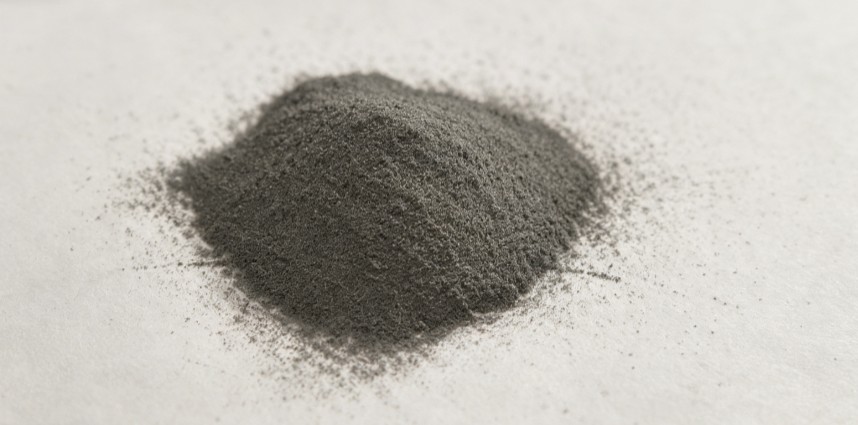
Magnetic particle clutches and high-frequency magnetic components demand raw materials with stable permeability, low coercivity and minimal core loss. Traditional iron powder and simple iron-silicon alloy materials often suffer from high eddy current loss, poor oxidation resistance and unstable magnetic performance under continuous cyclic operation. FeSiCr soft magnetic alloy powder is a multicomponent iron-based powder with precisely controlled silicon and chromium content. The addition of Si and Cr effectively improves electrical resistivity and corrosion resistance, overcoming many limitations of conventional soft magnetic powders. This article analyzes the material characteristics and typical application scenarios of FeSiCr soft magnetic alloy powder, helping engineers select suitable magnetic powder for magnetic transmission and electronic devices.


Core Performance Advantages of FeSiCr Soft Magnetic Alloy Powder

 
The standard FeSiCr formulation contains 6.2–6.8% Si and 4.2–4.8% Cr, with iron as the balance element. Strict control of trace impurities such as carbon, sulfur and phosphorus avoids defects that degrade magnetic properties.
 
Compared with pure iron powder and FeSi powder, FeSiCr alloy powder delivers prominent strengths:
 
First, higher electrical resistivity. Silicon and chromium elements reduce eddy current loss, which is vital for stable operation under long-term rotation and alternating magnetic fields in magnetic particle clutches.
 
Second, excellent anti-oxidation and anti-corrosion capacity. Chromium forms a dense passive oxide layer on particle surfaces, slowing powder aging and performance attenuation inside sealed magnetic transmission equipment, extending the service cycle of magnetic particle clutches and brakes.
 
Third, adjustable particle size distribution. The typical particle size range D50 60–100 μm (D10 ≥35 μm, D90 ≤140 μm) guarantees good flowability and uniform packing density. Consistent particle grading ensures stable torque output and avoids torque fluctuation during continuous equipment operation.
 
Low impurity specifications (C ≤0.03%, S ≤0.01%, P ≤0.02%) prevent impurity segregation, maintaining consistent magnetic performance batch by batch.


Main Industrial Application Scenarios


 1. Magnetic particle clutches & magnetic particle brakes: This is one of the most mature applications. Uniform FeSiCr powder forms a continuous magnetic chain under magnetic excitation, delivering smooth, controllable torque for tension control, printing machinery and winding equipment.

 2. High-frequency soft magnetic composite cores: Used for inductors, filters and power supply components. Low core loss makes it suitable for medium and high frequency electronic circuits.

 3. Electromagnetic vibration and actuation components: Ideal for equipment requiring stable magnetic response under variable working conditions.


FAQ


Q1: Why choose FeSiCr powder instead of pure iron powder for magnetic particle brakes?
 
A: Pure iron powder oxidizes easily, leading to gradual torque decline. FeSiCr with chromium addition provides superior corrosion resistance. Meanwhile, higher resistivity lowers heat generation during long running hours.
 
 
Q2: How does particle size affect the performance of magnetic particle clutches?
 
A: Matched particle size distribution improves stacking density. Too fine powder causes excessive friction and heat buildup; oversize particles lead to unstable torque. The D50 60–100μm specification achieves the balance of torque stability and service life.
 

Conclusion


FeSiCr soft magnetic alloy powder solves the oxidation and high-loss pain points of traditional magnetic powders, becoming a reliable option for magnetic particle clutches and high-frequency magnetic components. Precise element proportioning and controlled particle size distribution are critical to consistent magnetic performance.
 
We supply FeSiCr soft magnetic alloy powder matching the standard Si 6.2–6.8%, Cr 4.2–4.8% specification, with customizable oxygen index and particle size distribution. Complete batch test reports support stable production for magnetic transmission manufacturers and electronic component enterprises.

dejar un mensaje

dejar un mensaje
Si está interesado en nuestros productos y desea obtener más información, deje un mensaje aquí y le responderemos lo antes posible.
entregar

Hogar

Productos

WhatsApp

contacto

Ingrese los detalles del producto (como color, tamaño, materiales, etc.) y otros requisitos específicos para recibir un presupuesto preciso.
dejar un mensaje
Si está interesado en nuestros productos y desea obtener más información, deje un mensaje aquí y le responderemos lo antes posible.
entregar